
Key Elements of Effective Illustrated Educational Books
Introduction
Illustrated educational books intersect art and learning, skillfully transforming complex concepts into accessible knowledge by integrating meaningful visuals with well-crafted narratives. The power of these books lies in their ability to catch a child’s eye, deepen understanding, and create memorable learning experiences. As research in literacy and pedagogy continues to evolve, educators and families alike are placing more value on illustrated resources to enhance attention spans, boost comprehension, and foster expressive and receptive language skills. For example, illustrated books can support specialized areas such as monotone speech therapy, where carefully chosen visuals offer additional cues to promote speech and communication. These books’ thoughtful design and functionality are pivotal, serving as stepping stones to lifelong learning and confident communication.
This article explores the essential elements that contribute to truly effective illustrated educational books. From the clarity and simplicity of artwork to the age-appropriateness of content, from inclusivity to interactive engagement, we delve into how these elements create enriching resources for parents, teachers, students, and therapists alike.
Clarity and Simplicity in Illustrations
The foundation of a successful illustrated educational book is clarity. Clear, simple illustrations ensure that the reader, whether a child or an adult, remains focused squarely on the subject matter without being distracted by unnecessary artistic flourishes. Simplicity in design does not mean dull visuals; each element on the page serves a purpose and aids the learner in understanding the core concept. Young readers, who are still developing their ability to distinguish between visual details, can become overwhelmed by cluttered imagery. A National Library of Medicine study underscores that streamlined graphics lessen cognitive overload, significantly improving retention and learning outcomes, especially when clear illustrations are paired with concise, supportive text.
Illustrators should use simple backgrounds, focused color palettes, and bold shapes to draw attention to the main content. Characters, objects, and settings should be easily distinguished, with relatable expressions and gestures. White space and subtle cues help direct attention, opening a gateway to understanding and easily connecting images and words for the youngest minds.
Age-Appropriate Content
Illustrated educational books are versatile tools that cater to various developmental stages. For toddlers and preschoolers, bold, colorful illustrations are essential, promoting curiosity and focus. As children progress into elementary school, detailed elements can be added to help readers understand social and emotional cues. For older children and adults, complex diagrams, infographics, and symbolic representations are necessary for exploring complex concepts. Age-appropriate complexity aligns with cognitive and emotional development, motivating engagement and curiosity. The narrative is calibrated according to developmental readiness, ensuring readers feel challenged and supported as they progress through advanced material, ultimately building confidence in their understanding and application of new information.
Alignment with Educational Objectives
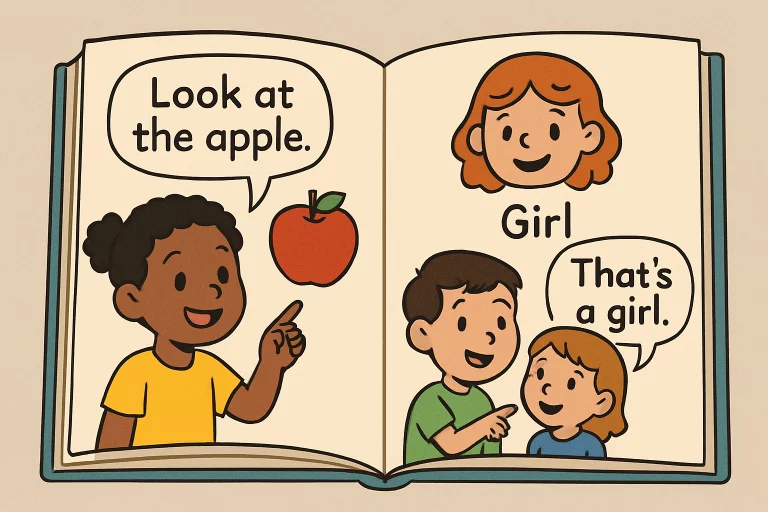
The illustrations in an educational book should never be arbitrary; each visual must intentionally align with the core lesson’s or story’s core teaching goals, highlighting a scientific process, explaining mathematical relationships, or modeling social behavior. Carefully chosen images reinforce targeted skills. For example, labeled diagrams inside science texts clarify the taught structure or function. At the same time, expressive mouth positions can support children working on speech clarity and intonation, which are crucial for resources in areas like speech therapy.
Effective educational books maintain a deliberate, harmonious flow between text and visuals. Ideally, illustrations are sequenced logically alongside concise captions, walking readers step-by-step through processes or narratives without leaving gaps in comprehension. This unity between words and pictures cements learning, with each reinforcing the other. When visual cues and textual explanations complement one another, learners are likelier to make connections, solve problems, and retain content long after the book is closed.
Encouraging Interaction and Engagement
Engagement is essential to meaningful learning, and illustrated educational books excel when they move beyond passive presentation to encourage active participation. Interactive illustrations—like hidden objects, matching games, or visual prompts—invite learners to pause, look closer, predict outcomes, and discuss their findings. These features can be used individually or as group activities, making them ideal for classrooms, therapy sessions, or at-home learning.
For older students and adults, engagement may stem from thought-provoking visual puzzles, spaces for drawing or note-taking, or even activities that require reflection and discussion on a meta-cognitive level. Each interactive element transforms reading from a one-sided affair into a dynamic, memorable, and multi-sensory experience. Studies have shown that such engagement deepens understanding and increases motivation for continued exploration, as readers take an active role in their education.
Diversity and Inclusivity
Truly effective illustrated books embrace the world’s rich diversity, thoughtfully representing differences in ethnicity, ability, language, family structure, culture, and identity, by depicting a wide array of characters, stories, and settings, b.oBooksomote inclusion an, pathy an,d global awareness. Children develop a broader, more compassionate worldview when they encounter images of themselves and their experiences reflected on the page, or see stories very different from their own.
Beyond representation, inclusivity in design is essential. Accessibility features such as dyslexia-friendly fonts, clear labeling, and strong picture cues help children with learning differences or non-native language backgrounds. Such thoughtful details open learning opportunities to every child, ensuring no one is left behind. By intentionally crafting books to be universally accessible and relatable, authors and illustrators extend the reach and impact of their educational resources, nurturing a generation that values individuality and community.
Consistency in Style and Quality
Maintaining a consistent style throughout an illustrated educational book is key to providing a smooth, immersive learning experience. Sudden changes in artistic technique, color scheme, or illustration quality can interrupt a reader’s train of thought and hinder overall understanding. Establishing a unified visual identity—from the first page to the last—helps readers feel secure, promotes comprehension, and reinforces essential messages through repetition and familiarity.
Quality, too, must never be sacrificed. High-quality illustrations should always complement the text, supporting it without overwhelming it. When words and visuals harmonize, the book becomes more than the sum of its parts—readability improves, enjoyment increases, and the likelihood that learners will revisit the material grows. By investing in style and substance, illustrated educational books become trusted companions for learners at all stages.
Conclusion
Illustrated educational books are powerful tools for learning, combining the clarity of purposeful visuals with the strength of well-crafted text. Their effectiveness depends on several guiding principles: clarity and simplicity, age-appropriateness, alignment with educational objectives, opportunities for interactive engagement, and an unwavering commitment to diversity, inclusivity, and consistency in style. By weaving these elements together, creators of educational resources can empower learners to explore, question, and understand the world with confidence and curiosity.


